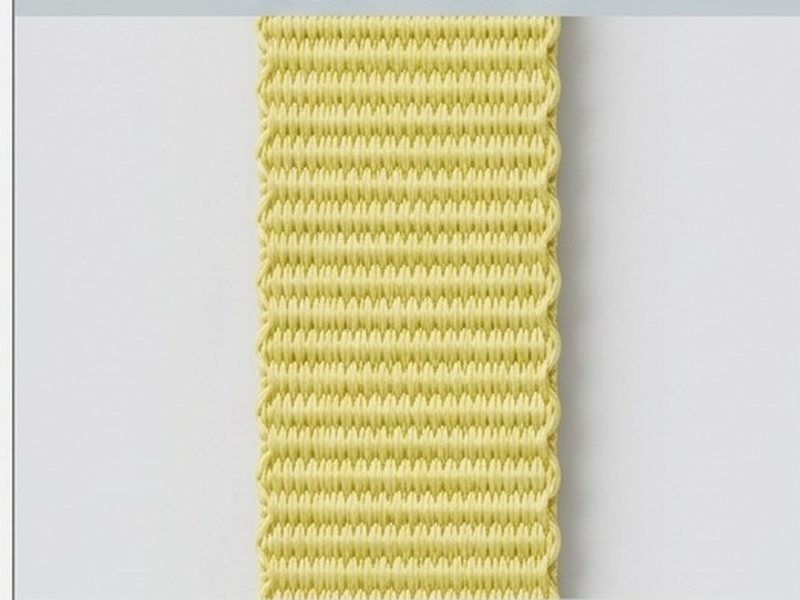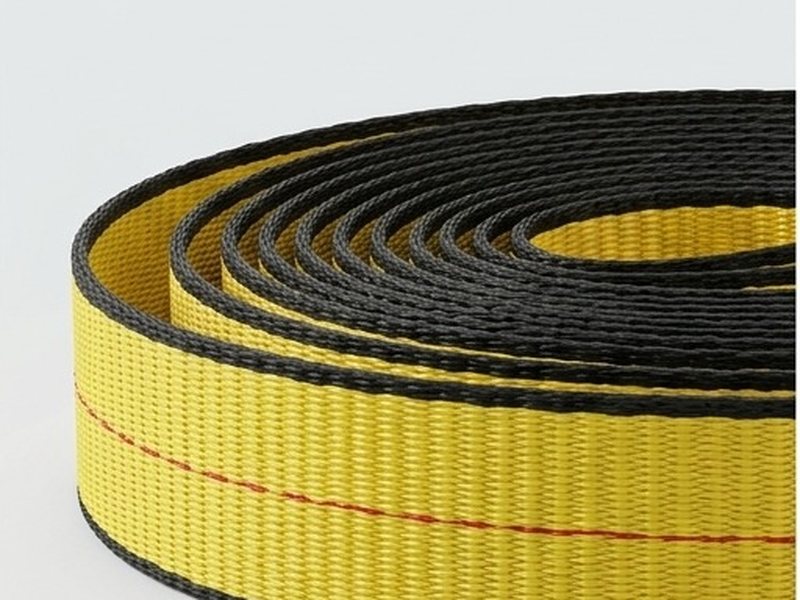
Colour
Dyed to your shade — a Pantone number, or a piece of the tape you use today. The whole order is dyed in one batch, so the last metre matches the first. Approval takes about five working days.
Twill weave
Thicker and softer than plain, with the diagonal lines you can see across it. This is the one for bag handles and rucksack straps, because it does not cut into the hand when it is pulled tight.
| Construction | Twill weave |
|---|---|
| Fibre | 100% polyester |
| Width range | 15 – 75 mm, in steps of 1 mm |
| Thickness | 1.2 mm |
| Weight | 16 g/m |
| Breaking strength | 760 kgf (ASTM D5035) |
| Colour | Custom dyed to your shade |
| Minimum order | 500 m per colour |
Width can vary by ±0.5 mm and weight by ±5%. The breaking strength shown is for the widest size in the range, tested by the ASTM D5035 method.
What it is
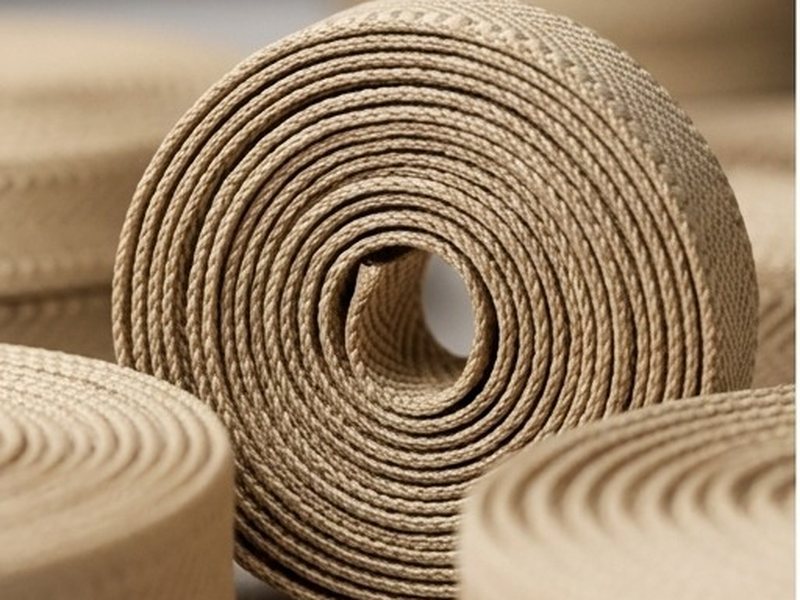
In a twill the warp yarn passes over two or three weft yarns before going under, and each row shifts along by one. That is what makes the diagonal line you can see — and it is also what makes the tape thicker and softer than plain.
A twill tape spreads load across more yarn than a plain tape of the same width, so it carries more before it gives. It also folds over a buckle bar without kinking, which matters on a strap someone adjusts every day.
If your customer complains that a handle digs into the palm, twill is usually the fix.
Where it is used
Ordering
Dyed to your shade — a Pantone number, or a piece of the tape you use today. The whole order is dyed in one batch, so the last metre matches the first. Approval takes about five working days.
Minimum 500 m per colour. A colour made specially for you carries a 3,000 m minimum for that colour. Widths outside the standard range are a fresh loom set-up, also from 3,000 m.
100 m to a roll on a paper core, or 25 m and 50 m spools if you sell it on. Standard lead time is 7–10 days up to 20,000 m, 12–15 days up to 50,000 m, and 18–22 days beyond that.